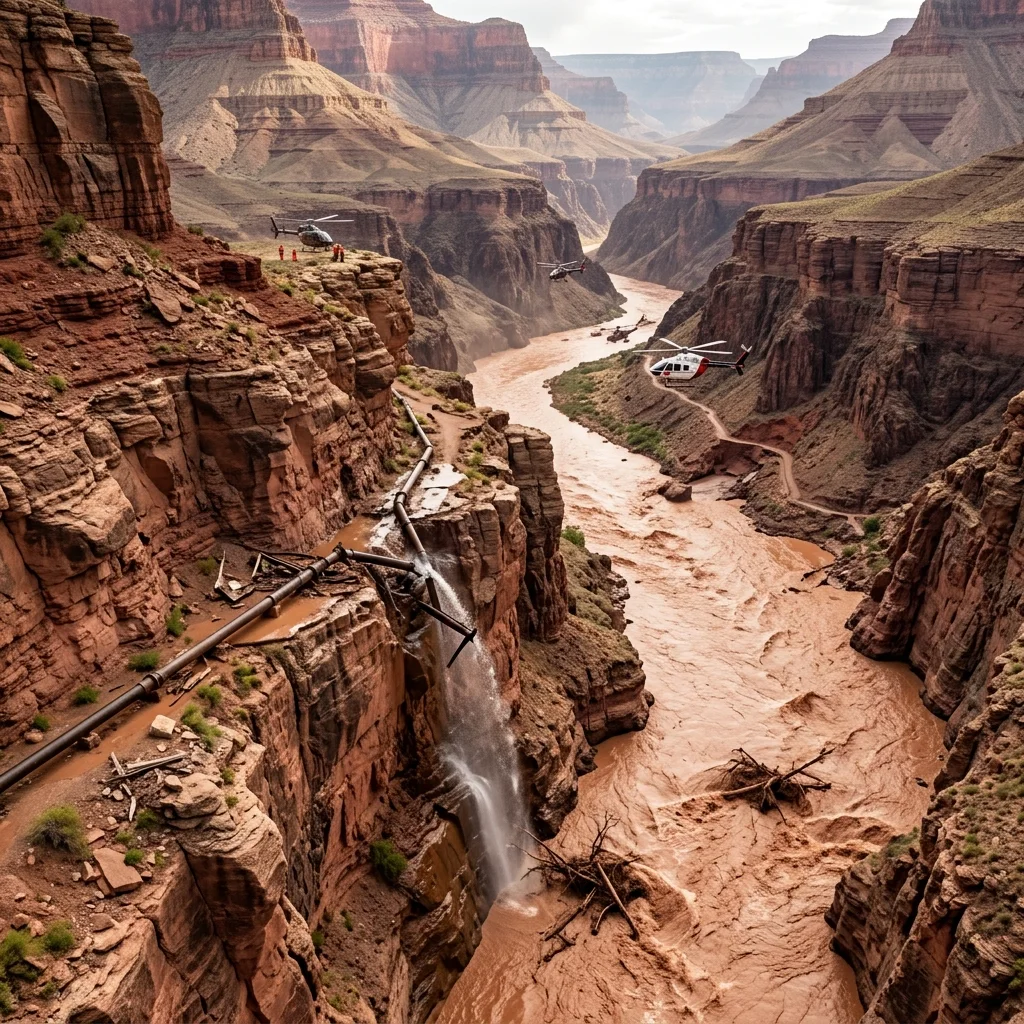
A flash flood swept through the Grand Canyon’s base near the South Rim earlier today, resulting in a devastating loss of life and significant damage to critical water infrastructure. Rescue teams are actively searching for survivors amidst the debris, while engineers assess the extent of the impact on the canyon's drainage systems. Initial reports indicate multiple fatalities and numerous people missing. Authorities have issued warnings about potential hazards across the region. The cause of the flood remains under investigation, with preliminary assessments suggesting a combination of heavy rainfall and rapidly rising water levels.
The Core Mechanism
Rescue teams are working tirelessly to locate survivors amidst the wreckage near the South Rim of the Grand Canyon following a severe flash flood that occurred earlier today. Initial reports suggest multiple fatalities, though the exact number remains unconfirmed. The rapid rise in water levels overwhelmed drainage systems, triggering the devastating event. Authorities have issued urgent warnings about potential hazards across the canyon region, including unstable terrain and weakened infrastructure. Search efforts are focusing on areas accessible to rescue teams and utilizing specialized equipment. Engineers are assessing the damage to critical water pipelines and dams, which could impact future tourism operations. The cause of the flood is currently under investigation; preliminary assessments point towards a combination of heavy rainfall and elevated water levels. Investigations will focus on analyzing weather patterns and geological conditions that contributed to the rapid rise in volume. The National Park Service has established temporary evacuation zones and urged visitors to remain vigilant, while prioritizing safety for all personnel involved in rescue operations. Further updates are expected as search efforts continue.
How the Effects Spread
The sudden surge of water caused by the flash flood near the South Rim has resulted in a tragic loss of life. Rescue teams are actively searching for survivors amidst the debris, hoping to locate anyone still alive. The rapid rise in water levels overwhelmed the canyon's drainage systems, causing significant damage to vital infrastructure. Authorities have issued warnings about unstable terrain and weakened dams across the region. Engineers are assessing the impact on pipelines and reservoirs, potentially affecting future tourism. The cause of this event is currently under investigation, with preliminary assessments suggesting a combination of heavy rainfall and elevated water levels. Officials emphasize the need for caution and preparedness as search efforts continue to prioritize safety. The National Park Service has established temporary evacuation zones, urging visitors to remain vigilant. Further updates will be provided as rescue teams progress their operations.
What It Means in Practice
A flash flood swept through the Grand Canyon's base near the South Rim earlier today, resulting in a devastating loss of life and significant damage to critical water infrastructure. Rescue teams are actively searching for survivors amidst the debris, though initial reports suggest multiple fatalities, though the exact number remains unconfirmed. The rapid rise in water levels overwhelmed drainage systems, triggering the devastating event. Authorities have issued warnings about unstable terrain and weakened dams across the region. Engineers are assessing the impact on pipelines and reservoirs, potentially affecting future tourism. The cause of the flood is currently under investigation; preliminary assessments point towards a combination of heavy rainfall and elevated water levels. Investigations will focus on analyzing weather patterns and geological conditions that contributed to the rapid rise in volume. The National Park Service has established temporary evacuation zones and urged visitors to remain vigilant, while prioritizing safety for all personnel involved in rescue operations. Further updates are expected as search efforts continue. The cause of this event is currently under investigation, with preliminary assessments suggesting a combination of heavy rainfall and elevated water levels.
A flash flood swept through the Grand Canyon's base near the South Rim earlier today, resulting in a devastating loss of life and significant damage to critical water infrastructure. Rescue teams are actively searching for survivors amidst the debris, though initial reports suggest multiple fatalities, though the exact number remains unconfirmed. The rapid rise in water levels overwhelmed drainage systems, triggering the devastating event. Authorities have issued warnings about unstable terrain and weakened dams across the region. Engineers are assessing the impact on pipelines and reservoirs, potentially affecting future tourism. The cause of the flood is currently under investigation; preliminary assessments point towards a combination of heavy rainfall and elevated water levels. Investigations will focus on analyzing weather patterns and geological conditions that contributed to the rapid rise in volume. The National Park Service has established temporary evacuation zones and urged visitors to remain vigilant, while prioritizing safety for all personnel involved in rescue operations. Further updates are expected as search efforts continue.
What Matters Most
A flash flood swept through the Grand Canyon’s base near the South Rim earlier today, resulting in a devastating loss of life and significant damage to critical water infrastructure. Rescue teams are actively searching for survivors amidst the debris, though initial reports suggest multiple fatalities, though the exact number remains unconfirmed. The rapid rise in water levels overwhelmed drainage systems, triggering the devastating event. Authorities have issued warnings about unstable terrain and weakened dams across the region. Engineers are assessing the impact on pipelines and reservoirs, potentially affecting future tourism. The cause of the flood is currently under investigation; preliminary assessments point towards a combination of heavy rainfall and elevated water levels. Investigations will focus on analyzing weather patterns and geological conditions that contributed to the rapid rise in volume. The National Park Service has established temporary evacuation zones and urged visitors to remain vigilant, while prioritizing safety for all personnel involved in rescue operations. Further updates are expected as search efforts continue.
This article is for information and education only. It is not a personal investment recommendation. Read our disclosures.