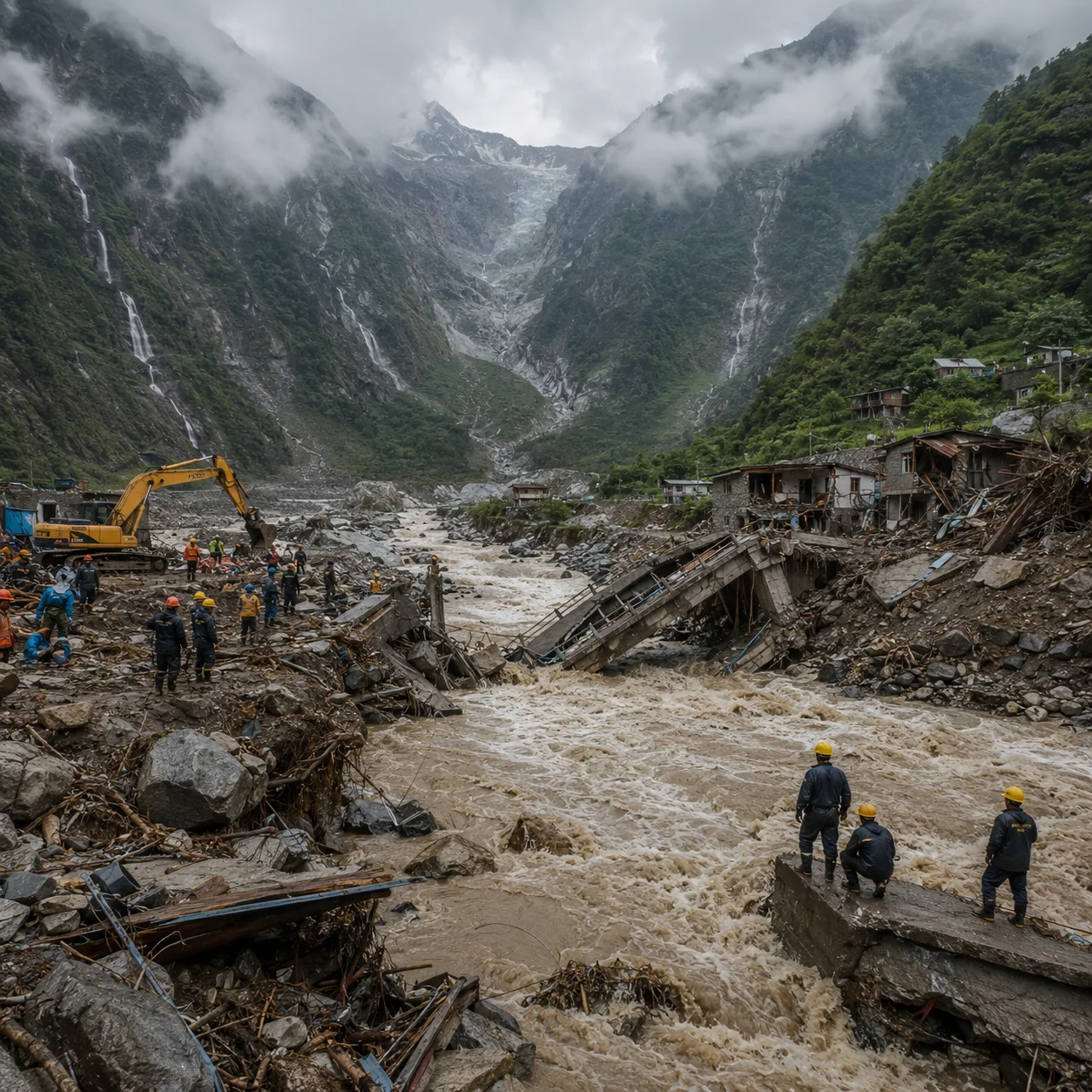
A devastating flood has struck the Himalayan region of Nepal and Tibet, leaving a trail of destruction and loss. Heavy rainfall over the past weeks triggered widespread landslides and glacial meltwater runoff.
The disaster began on Wednesday morning, with rivers overflowing their banks and inundating villages and communities.
As of this moment, authorities have confirmed more than 1,100 fatalities across Nepal and Tibet. Hundreds remain unaccounted for, with rescue efforts underway in affected areas.
The region has been particularly hard hit due to the proximity of high-altitude glaciers, which are rapidly melting at an accelerated pace.
Emergency services are struggling to reach isolated communities, hampered by damaged roads and difficult terrain. International aid organizations are mobilizing resources to assist those displaced.
Officials estimate that over 4,000 people have been displaced from their homes.
The situation remains fluid, with ongoing assessments of the damage.
The Core Mechanism
A devastating flood has struck the Himalayan region of Nepal and Tibet, leaving a trail of destruction and loss. Heavy rainfall over the past weeks triggered widespread landslides and glacial meltwater runoff.
The disaster began on Wednesday morning, with rivers overflowing their banks and inundating villages and communities.
As of this moment, authorities have confirmed more than 1,100 fatalities across Nepal and Tibet. Hundreds remain unaccounted for, with rescue efforts underway in affected areas.
The region has been particularly hard hit due to the proximity of high-altitude glaciers, which are rapidly melting at an accelerated pace.
Many communities are now facing severe water shortages as rivers recede.
Emergency services are struggling to reach isolated communities, hampered by damaged roads and difficult terrain. International aid organizations are mobilizing resources to assist those displaced.
The situation remains fluid, with ongoing assessments of the damage.
How the Effects Spread
A devastating flood has struck the Himalayan region of Nepal and Tibet, leaving a trail of destruction and loss. Heavy rainfall over the past weeks triggered widespread landslides and glacial meltwater runoff.
The disaster began on Wednesday morning, with rivers overflowing their banks and inundating villages and communities. As of this moment, authorities have confirmed more than 1,100 fatalities across Nepal and Tibet. Hundreds remain unaccounted for, with rescue efforts underway in affected areas.
The region has been particularly hard hit due to the proximity of high-altitude glaciers, which are rapidly melting at an accelerated pace. Many communities are now facing severe water shortages as rivers recede. Emergency services are struggling to reach isolated communities, hampered by damaged roads and difficult terrain. International aid organizations are mobilizing resources to assist those displaced. The situation remains fluid, with ongoing assessments of the damage.
What It Means in Practice
A devastating flood has struck the Himalayan region of Nepal and Tibet, leaving a trail of destruction and loss. Heavy rainfall over the past weeks triggered widespread landslides and glacial meltwater runoff.
The disaster began on Wednesday morning, with rivers overflowing their banks and inundating villages and communities. As of this moment, authorities have confirmed more than 1,100 fatalities across Nepal and Tibet. Hundreds remain unaccounted for, with rescue efforts underway in affected areas. Rising water levels are causing significant damage to infrastructure, including roads and bridges, hindering emergency response. The region has been particularly hard hit due to the proximity of high-altitude glaciers, which are rapidly melting at an accelerated pace. Many communities are now facing severe water shortages as rivers recede. Emergency services are struggling to reach isolated communities, hampered by damaged roads and difficult terrain. International aid organizations are mobilizing resources to assist those displaced. The situation remains fluid, with ongoing assessments of the damage.
The catastrophic flood in Nepal and Tibet has resulted in over 1,100 deaths and nearly 4,000 displaced people. Heavy rainfall over the past weeks triggered widespread landslides and glacial meltwater runoff, dramatically reshaping the landscape. Initial reports indicate significant damage to infrastructure across affected areas, including roads, bridges, and communication lines. Emergency services are struggling to reach isolated communities due to damaged infrastructure and challenging terrain. Rescue efforts are focused on providing immediate assistance to those impacted, with priority given to vulnerable populations. The rapid melting of high-altitude glaciers is exacerbating the situation, further contributing to water shortages for many communities. Authorities are assessing the full extent of the damage and coordinating relief efforts across Nepal and Tibet. International aid organizations are mobilizing resources to support affected residents. The disaster highlights the vulnerability of mountainous regions to climate change impacts. More information will be released as it becomes available through official channels. The situation remains fluid, with ongoing assessments of the damage and a focus on stabilizing communities impacted by the flooding.
A devastating flood has struck the Himalayan region of Nepal and Tibet, leaving a trail of destruction and loss. Heavy rainfall over the past weeks triggered widespread landslides and glacial meltwater runoff.
The disaster began on Wednesday morning, with rivers overflowing their banks and inundating villages and communities. As of this moment, authorities have confirmed more than 1,100 fatalities across Nepal and Tibet. Hundreds remain unaccounted for, with rescue efforts underway in affected areas.
The region has been particularly hard hit due to the proximity of high-altitude glaciers, which are rapidly melting at an accelerated pace. Many communities are now facing severe water shortages as rivers recede. Emergency services are struggling to reach isolated communities, hampered by damaged roads and difficult terrain. International aid organizations are mobilizing resources to assist those displaced. The situation remains fluid, with ongoing assessments of the damage. Rising water levels are causing significant damage to infrastructure, including roads and bridges, hindering emergency response."
The catastrophic flood in Nepal and Tibet has resulted in over 1,100 deaths and nearly 4,000 displaced people. Heavy rainfall over the past weeks triggered widespread landslides and glacial meltwater runoff, dramatically reshaping the landscape. Initial reports indicate significant damage to infrastructure across affected areas, including roads, bridges, and communication lines. Emergency services are struggling to reach isolated communities due to damaged infrastructure and challenging terrain. Rescue efforts are focused on providing immediate assistance to those impacted, with priority given to vulnerable populations. The situation remains fluid, with ongoing assessments of the damage and a focus on stabilizing communities impacted by the flooding. More information will be released as it becomes available through official channels.
The disaster highlights the vulnerability of mountainous regions to climate change impacts. More information will be released as it becomes available through official channels.
A devastating flood has struck the Himalayan region of Nepal and Tibet, leaving a trail of destruction and loss. Heavy rainfall over the past weeks triggered widespread landslides and glacial meltwater runoff. The disaster began on Wednesday morning, with rivers overflowing their banks and inundating villages and communities. As of this moment, authorities have confirmed more than 1,100 fatalities across Nepal and Tibet. Hundreds remain unaccounted for, with rescue efforts underway in affected areas. The region has been particularly hard hit due to the proximity of high-altitude glaciers, which are rapidly melting at an accelerated pace. Many communities are now facing severe water shortages as rivers recede.
What Matters Most
A devastating flood has struck the Himalayan region of Nepal and Tibet, leaving a trail of destruction and loss. Heavy rainfall over the past weeks triggered widespread landslides and glacial meltwater runoff. The disaster began on Wednesday morning, with rivers overflowing their banks and inundating villages and communities.
The event is a result of heavy rainfall and glacial melt. As of this moment, authorities have confirmed more than 1,100 fatalities across Nepal and Tibet. Hundreds remain unaccounted for, with rescue efforts underway in affected areas.
The region has been particularly hard hit due to the proximity of high-altitude glaciers, which are rapidly melting at an accelerated pace. Many communities are now facing severe water shortages as rivers recede. Emergency services are struggling to reach isolated communities, hampered by damaged roads and difficult terrain. International aid organizations are mobilizing resources to assist those displaced. The situation remains fluid, with ongoing assessments of the damage. Rising water levels are causing significant damage to infrastructure, including roads and bridges, hindering emergency response.
This article is for information and education only. It is not a personal investment recommendation. Read our disclosures.